Friday, May 24, 2019

Wednesday, December 19, 2018
VA abandons suicide prevention program

Affairs officials failed to spend millions of dollars earmarked for veterans suicide prevention efforts in fiscal year 2018, leading to a measurable decline in outreach activity, according to a report from the U.S. Government Accountability Office (GAO).
“Leadership turnover and reorganization since 2017” led to a “decrease in suicide prevention media activities” over the past two years, the report found. The agency employed no permanVeterans ent national director for suicide prevention between July 2017 and April 2018, and agency employees told investigators that there were not always leadership officials available to make key decisions or run meetings related to suicide prevention outreach. These shortcomings forced staffers to shift “their focus away from the suicide prevention media outreach campaign” and toward other mental health efforts.
Monday, December 3, 2018
Reflections of a PTSD Freefall
Poem In The Dark

by Steven Masone
Through the tear stained windows
of my dark and cold night...
Quiet shadows cast down from above.. no warmth... no light.
Inwardly I grieve, as the faraway music cries...closing her melodic door,
Sweet songs fading, the beauty of their refrain, ...no more.
My eyes lift and see the pale glimmer... vanish as a fleeting cloud...
Torn between sense and sound, I give up my voice...I cry aloud!
More tears upon my tears, falling down and down they fell,
rivers... deep fountains, searching for the bitter... black fire to quell.
Ashes of broken dreams fly upward ...in courage, with resurrected strength, ringing hope's bell.
I rise up from the dazed and blind torment... of my long,
lonely, and unbearable... Hell!
Monday, November 19, 2018
VA Chapter 31 Voc Rehab Needs Overhaul!

Veterans Administration Watch:
The story is many Voc Rehab workers pick and choose who they will help and hinder those who is not worthy of their time. Many veterans fight with VA Vocational Rehabilitation for years before figuring out that program administrators are straight up lying to them about what the program can do for any veteran.
Want to know what those lies are before you fall victim?
Thousands of disabled veterans apply for Chapter 31 Vocational Rehabilitation every year. Some are successful in getting the benefits they deserve and some are not.
In my time researching and writing on the subject, there seems to be a common theme arising: lies. Many veterans are misled about what Voc Rehab can do for them even though policies exist that contradict what counselor say.
This leads one to conclude that either there are guidelines to excuses somewhere that Vocational Rehabilitation Counselors live by, or there is an underlying discussion between offices as to what excuses can be used to keep deserving disabled veterans from their benefits.
It reminds me of a period of my life when I spent a great deal of my recreational time researching the Bible. Living in England at the time, I used the ESV Bible, the Cambridge Companion to the Bible, the Nag Hammadi Scriptures, and a copy of The Living Buddha, Living Christ that my grandmother sent me. Over the years, scholars have found there to be such commonality between the New Testament Gospels that they came to believe there existed a fifth text referred to as “Q.” Q is believed by many scholars to be the first written gospel that contained many of the quotes and anecdotes of Jesus’ time on Earth.
In a similar way, one cannot help but speculate that there is a similar text that creates a common set of lies Vocational Rehabilitation Counselors tell disabled veterans when denying claims. In my searches for it, I seem only to find regulations that support veterans’ claims for benefits -- strange.
VOC REHAB BACKGROUND
Background. The Department of Veterans Affairs Office of Inspector General (DVA OIG) ordered an audit of the VR&E program in 2007 and a subsequent survey sampling of 80,000 veterans to find out why so many disabled veterans never complete the program. While VR&E boasts a success rate of close to 75 percent to the U.S. Congress, the real number is much lower. According to the DVA OIG, the true success rate is closer to 18 percent. Most qualified veterans drop out of Vocational Rehabilitation and Employment (VR&E) before developing an Individual Written Rehabilitation Plan (IWRP). Many more drop out before finishing the program. VR&E has not been including these cases in their reported success rate.
In Corporate America, this is called “cooking the books,” for which people have gone to jail and been sued. Lucky for VR&E, the officials of this ENRON of the federal government are largely blanketed by sovereign immunity. The government has to agree to let you sue the government. Convenient.
Thursday, August 16, 2018
PTSD Music and Arts Foundation Spearheading PTSD Task Force

Note from Publisher: I met Ron Sticka through my efforts to form a Guitars for Vets program in Eugene, Oregon., I was invited by Ron to attend the First Annual PTSD Symposium on July 21 and to join discussion at a special luncheon with a cross section of various mental health professionals and others impacted by PTSD-related experiences. I was very impressed by the entire program and the outreach for more awareness of the broad spectrum of people who suffer this condition. Colonel Sticka has offered to spearhead a grass roots initiative to form a PTSD task force to continue dialog and have a working group composed of volunteer experts seeking solutions and better approaches for the real problems.
Why can't we launch a PTSD Task Force?

By Ronald R. Sticka,
Executive Director, Colonel, USAF (Retired)
Our foundation sponsored the 2018 First Annual PTSD Symposium held at The Shedd on July 21. The afternoon portion was covered by the media, but the morning veteran session largely went unnoticed. Senate President Peter Courtney spoke well of our town hall concept and mentioned his concerns about suicide rates. Senator James Manning, Jr., a retired Army Sergeant Major, then set the tone for this event. I joined psychologists Dr. Michael Leeds and Dr. Stephanie Rodriguez with a review of the nature and scope of PTSD and common treatment methods. By my estimate, about one-third of our citizens are impacted by PTSD - Post-Traumatic Stress Disorder. That's well over 1.5 million people in Oregon alone. PTSD is defined in the Diagnostic and Statistical manual, now DSM-5, a standardized mental health resource. PTSD seems to occur following a threat event perceived by the subconscious mind which overwhelms the conscious mind's capacity to process stimuli to a "fight or flight" decision. The result is a brain "freeze" and lack of defensive response. The short term memory and emotion processor, the hippocampus, shuts down much like an overloaded computer, but the hormone-regulating amygdala continues to ring the alarm bells sensing threat even after the real danger has passed. We should be looking for ways to return the brain to a state of normalcy through a "freeze discharge" process, much like a reboot or rewiring of a computer system when the pathways are burned out. I call this restoration of neural pathways "resensitization".
Last year our state legislature enacted Senate Bill 129, tasking the ODVA Advisory Committee to review and report on the merits and benefits of appointing a task force to evaluate and make recommendations regarding the diagnosis and treatment of PTSD for all Oregonians. It was also asked to decide on the composition of such a task force, funding requirements, and the likelihood this step would improve the treatment of PTSD. I appeared before the Advisory Committee and spoke in support of the task force concept. However the members concluded they did not have sufficient information to make requested findings, and recommended around $2,000,000 be appropriated to fund a study of PTSD. Following that, the legislature instead enacted Senate Bill 1548, changing PTSD to PTSI, substituting the word "injury" for "disorder", and making June 27 of each year Oregon Post-Traumatic Stress Injury Awareness Day. The task force concept enunciated in S.B. 129 has now expired by operation of law. So, things remain the same as before. Veterans and non-veterans continue to die by their own hands at an alarming rate.
Senate Bill 1548 is confusing at best, and does nothing new to enhance research or explore new therapy initiatives. Our symposium this year gave primary focus to the youngest victims among us; those suffering abuse and neglect during their critical formative years. Dr. Carmen Ionescu, child psychiatrist and naturopathic doctor, spoke about overmedication issues and alternative treatment options, some new and some quite old. Other speakers discussed new therapies involving animals, farming, music and art, and outdoor camping. "What about putting working dogs into our schools?" asked Marian Stiegeler, a child therapist who now includes her dog, Caesar, in her counseling sessions. Dr. John LeBow would have veterans at Camp Alma plowing behind a team of horses. The Youth House concept presents a bold new strategy for homeless teens. Dr. Beth Wheeler spoke about putting aside bias to do honest and truly objective research. Perhaps it should come down to the professionals, victims, and others most affected by PTSD to exercise some good old-fashioned American resolve, and harmoniously work together toward solutions. How about forming a grass roots task force to explore those questions the legislature chose not to pursue? Giving PTSD a new name may have merit, but what to call it is the least of our concerns. It's time to pool our resources and get down to the important task of giving hope to all Oregonians in our quest to conquer PTSD.
for more info see... http://www.ptsdmusicarts.org/

Monday, April 23, 2018
Music Festival Celebrates Vets ~Guitars For Vets
Monday, April 23, 2018
DOWN RANGE~ A Music Festival ~ Celebrating Veterans


Sacramento, Calif. -- Down Range Music Festival, a one-day event benefiting the Sacramento Chapter of Guitars For Vets, is debuting on May 19, 2018 at The Park at The Murieta Inn and Spa. The all-day event, produced by Blue Gaucho Project, will be a multi-genre event and feature a number of successful performers. All proceeds from the event will be donated to the Sacramento Chapter of Guitars For Vets, a nonprofit empowering veterans through music.
Thousands of our war Veterans are afflicted with Post Traumatic Stress Disorder (PTSD). In fact, more soldiers have committed suicide since the Vietnam War than have died in actual battle. But many are finding hope in an unlikely place: behind the wood and strings of an acoustic guitar. The healing power of music helps soldiers cope. That’s why we provide veterans with guitars and a forum to learn how to play. But we can't do it without your help.
GUITARS FOR VETS HAS FULFILLED OVER 30,000 LESSONS AND DISTRIBUTED OVER 3,000 GUITARS FREE TO MILITARY VETERANS.
PETE ANDERSON & FRIENDS
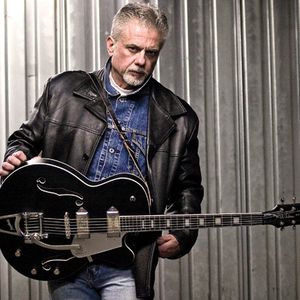
https://www.eventbrite.com/e/down-range-a-music-festival-celebrating-veterans-tickets-42684839504?aff=es2

Wednesday, March 28, 2018
Your Fired! Shulkin Out At Veterans Administration
President Donald Trump is firing Veterans Affairs Secretary David Shulkin and replacing him with the White House doctor Ronny Jackson. (March 28) AP
WASHINGTON – Veterans Affairs Secretary David Shulkin is being replaced, President Trump tweeted Wednesday, ending weeks of speculation and uncertainty about his fate.
Trump said he is nominating Navy Rear Adm. Ronny Jackson, official physician for the president and his predecessor, Barack Obama, to be the next VA secretary.
"I am thankful for Dr. David Shulkin's service to our country and to our great VETERANS!" the president tweeted.
He said Robert Wilkie, an undersecretary at the Pentagon, will take over the agency as acting secretary.
Shulkin had been locked for months in a power struggle with a group of Trump political appointees among his senior staff.
Shulkin had pledged the VA would not be privatized on his watch but would provide veterans expanded opportunities to get private sector care. The Trump appointees want a more comprehensive overhaul and to give veterans more access to VA-funded care in the private sector.
Trump had praised the Cabinet secretary several weeks ago for doing a “great” and “incredible” job leading the charge to fulfill his pledges to improve the VA.
Shulkin himself provided the critical opening that led to his downfall. After touting Trump's campaign pledges to increase accountability at the VA, he balked at the results of an investigation released last month that found he and his staff committed ethics violations in planning and taking a European trip last year.
He blasted the VA inspector general’s findings that he improperly accepted Wimbledon tickets and airfare for his wife during the 10-day junket. He refused to accept the determination that his chief of staff misled ethics officials to get clearance for his wife's airfare, suggesting that her email had been hacked. Shulkin later expressed regret and repaid the cost of the tickets and airfare. He also complained that the appointees were targeting and undermining him.
His response left many lawmakers, veterans groups and others who might have come to his defense in a tough spot, and they remained largely silent for days after the investigation report's release Feb. 14. By the time they did speak out, it may have been too late.
Two days after the report's release, the White House unilaterally installed a new VA chief of staff, Peter O’Rourke, who was a member of Trump’s transition team and an ally of the Trump appointees. VA spokesman Curt Cashour said “additional personnel accountability actions” were possible.
The White House never removed that cloud over Shulkin's future. Spokeswoman Sarah Sanders said that Trump supported the work Shulkin did as secretary but that the situation was "under review."
Shulkin made it roughly 13 months in Trump's Cabinet. He was appointed by Obama as undersecretary for health at the VA in July 2015.
During his tenure, he directed increased transparency efforts, including a new website revealing wait times for VA care and quality comparisons to the private sector. Shulkin upped accountability efforts, swiftly removing hospital directors when problems with care were revealed, including in Manchester, N.H., and Washington. He set up a data-tracking center at headquarters in an effort to intervene before problems became crises.
He fulfilled some of Trump's campaign promises on veterans' issues, overseeing the creation of a 24-hour White House hotline for veteran complaints and an Accountability and Whistleblower Protection Office, which drew praise for its early efforts.
Shulkin ordered the rewriting of decades-old policies on hiring and reporting poor medical care providers to authorities after USA TODAY revealed massive lapses in hiring guidelines and in reporting substandard practitioners to state licensing boards and a national database created to stop them from crossing state lines to escape their pasts and potentially harm other patients.
Shulkin had been working with Congress to pass landmark legislation that would expand — if moderately — veterans' access to private sector care, and the measure was poised to pass the Senate before the power struggle between Shulkin and Trump appointees erupted into public view.
He ordered plans for the largest restructuring of the VA in more than 20 years after the VA inspector general uncovered failures at the Washington VA medical center that had festered for years under VA officials at local, regional and national levels who knew about them but didn't fix them.
The fate of the legislation and reorganization after Shulkin’s departure is uncertain.
The chairman of the House Veterans Affairs Committee, Rep. Phil Roe, R-Tenn., said he thinks Shulkin did a "fantastic job, and I hate to see him go.
"That said, I respect President Trump’s decision, support the president’s agenda and remain willing to work with anyone committed to doing the right thing on behalf of our nation’s veterans," Roe said. “I am in the process of reaching out to Dr. Jackson, and I look forward to building a strong relationship with him also.”
Subscribe to:
Posts (Atom)